
Written by Maksim
Uchigomori and other finger stones for kasumi polishing on knives
After visiting a professional sword polisher in Japan I learned a lot more about how to use finger stones properly. I want to share that here — not for swords, but for knives and razors.
Finger stones come from the tradition of Japanese sword polishing. The polisher holds tiny thin slices of stone on their fingertips and works them across the blade surface section by section. On knives this gives you a beautifully even kasumi finish on the jigane.
What Are Finger Stones?
Finger stones are very thin slices of natural stone — about 0.5mm thick — glued onto rice paper. You hold them on your fingertip and rub them across the blade surface. Because the stone is so thin and flexible, it conforms to the shape of the bevel and gives a very even polish that a flat bench stone cannot match.
Types of Finger Stones
Uchigomori
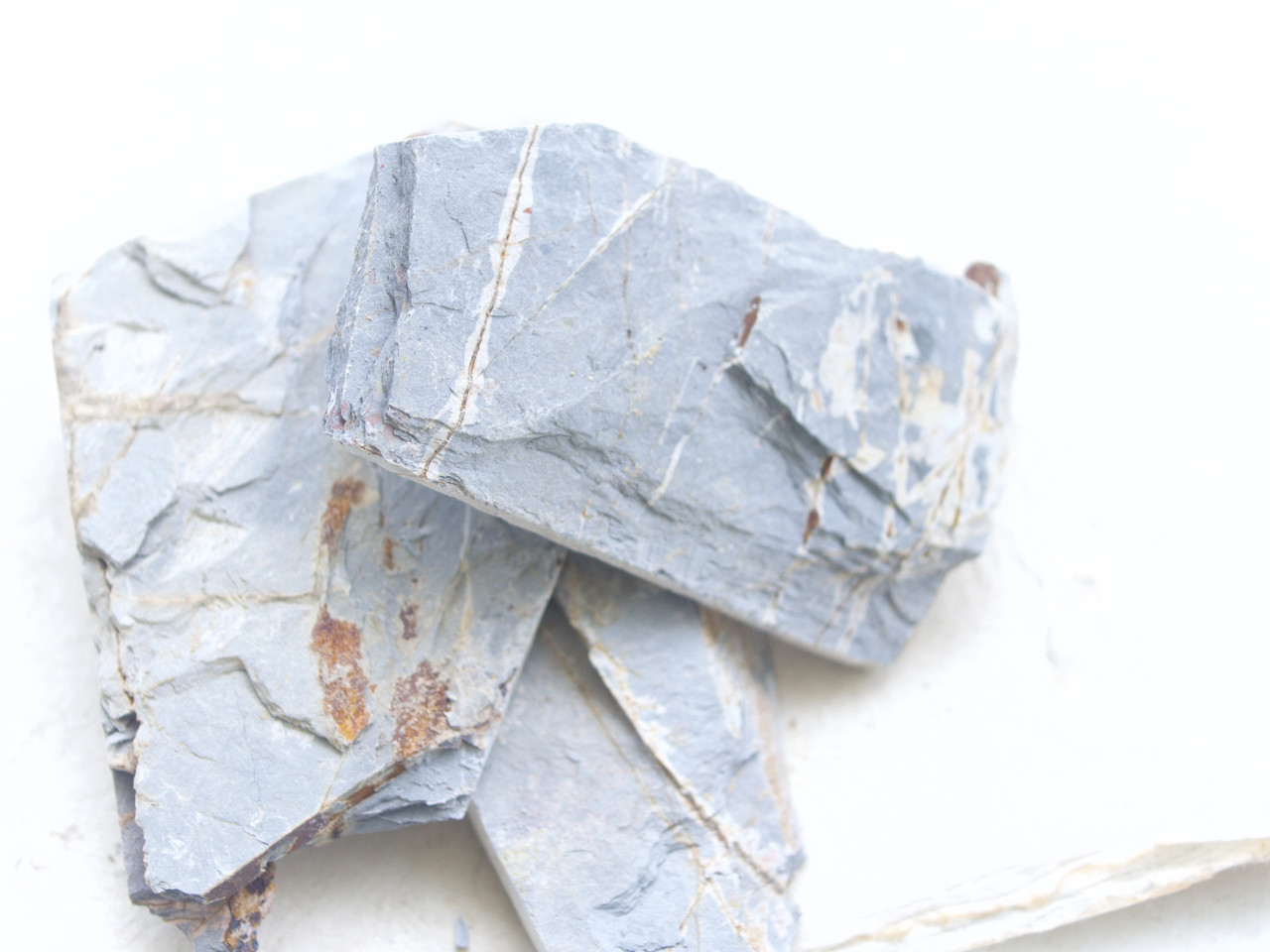
The most traditional and most used finger stone. Soft, very fine, muddy stone from Tenjyou Suita strata — almost exclusively from Ohira mine. Gives the classic hazy kasumi on jigane. Also used by sword polishers in Japan for the final stages of sword finishing. This is the one to start with !!!
Narutaki Kiita
Yellow Narutaki stone split into finger stones. Good for bringing out the shiny contrast between the hagane and jigane on clad knives. Slightly different finish character than Uchigomori and used after Uchigomori for brighter finish
Ready-made sets (JNS)
I sell ready-to-use finger stone sets that are already flattened, selected and tested. Only stones without any lines or inclusions go in the sets. You just need to break them up into finger-sized pieces and they are ready to use. Saves a lot of preparation time.
Shop Finger Stones →How to Make Finger Stones From Scratch
If you have Uchigomori or other soft natural stone offcuts, you can make your own. Here is what you need:
- Uchigomori or other soft Japanese natural stone (Koppa or offcut works well)
- Hammer
- Very thin tissue paper or traditional Yoshino-gami rice paper
- Waterproof and flexible glue — or Urushi lacquer if you have it
- A thin flexible blade to split the stone with
Use the thin blade and hammer to split the stone along the grain layers. Try to split as thin as possible — the grain direction is important. Splitting against the grain gives you a rough, unstable slice that will break.
Only use clean pieces. Lines and inclusions will scratch the blade. Discard any pieces with visible inclusions or dark lines running through them.
Flatten the piece on a 300 grit synthetic stone until it is about 1mm thick. Then let it dry completely. Do not rush this step — if you glue a wet stone it will warp.
Glue the dried stone slice to your Yoshino-gami paper using waterproof flexible glue or Urushi. Let the glue dry completely.
After gluing, flatten again on an Aoto or Tsushima stone until the stone is about 0.5mm thick. The most important thing: it must be the same thickness all the way across. Uneven thickness means uneven pressure on the blade. Also cut the corners off — the corners wear out slower than the middle and cause uneven contact.
Trim the piece to the size of your fingertip. The stone should cover your finger pad comfortably — not too large, not too small. You hold it with your fingertip and press it flat against the blade surface.
How to Use Finger Stones
Hold the finger stone flat against your fingertip — stone side facing the blade. Press it gently onto the blade surface and move it in back-and-forth strokes. The blade stays stationary, the finger stone moves.
- Keep it wet but not soaking. A drop of water is enough. The stone raises its own slurry as you work.
- Very light pressure. The weight of your finger is more than enough. Pressing hard will leave scratches. Let the slurry do the work.
- Work in sections. Do not try to polish the whole blade in one pass. Work a small section at a time, overlapping slightly.
- Pre-polish the jigane first. Finger stones are a finishing step. Get the jigane polished well on your main bench stone first — the finger stone refines and evens out that finish, it does not start from scratch.
Videos
Three videos showing finger stone preparation and technique on knives and razors.
How to use Uchigomori finger stones for knife and razor polishing
Finger stone technique — kasumi finish on jigane
Finger stones in use — final polishing pass
That is it :) If you have questions about finger stones or want to know which type is right for your knife, just message me on WhatsApp.